
Operational Cyber Leadership
Leadership across cyber command, command-and-control, mission defense, training, inspection, and global operations.
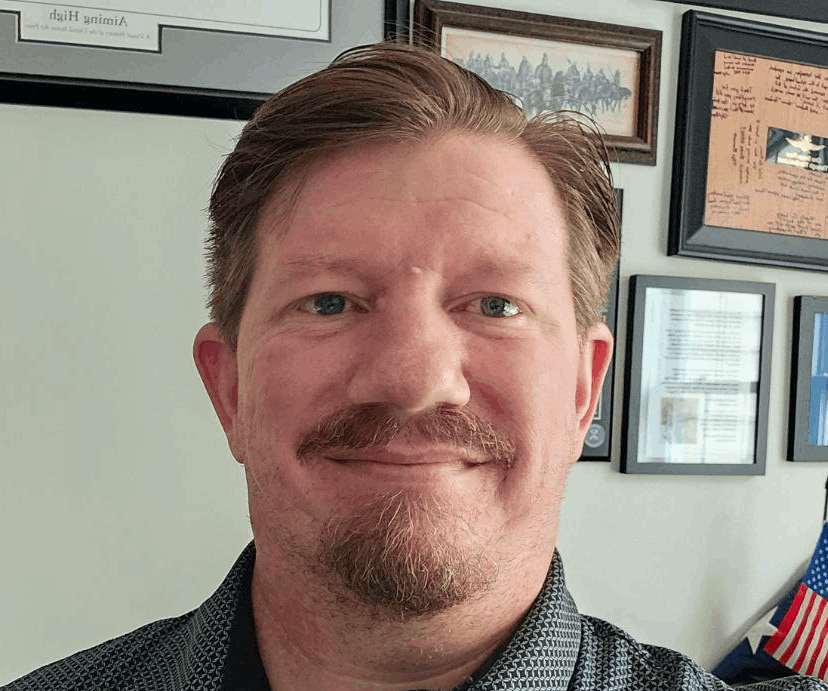
Founder · Cyber Operations Leader · Framework Author
Founder and CEO, Cyber Strategy Institute
Engineering prevention-first cybersecurity and runtime AI governance that preserve human authority, constrain autonomous systems, and replace uncertainty with enforceable control.
The Architect
Vincent Sullivan founded Cyber Strategy Institute to translate high-consequence cyber operations experience into security architectures that prevent compromise rather than merely detect it after execution. He is a retired U.S. Air Force lieutenant colonel whose 22-year military career culminated in senior operational and technical leadership at U.S. Cyber Command.
His work follows a direct operating principle: policy and intent do not establish control by themselves. Cybersecurity and AI governance must be enforced in the operating architecture through bounded authority, fail-closed controls, verifiable execution, human override, and evidence that can withstand operational and regulatory scrutiny.
At Cyber Strategy Institute, Vincent leads the development of open frameworks, protocols, assessments, and implementation architectures spanning autonomous-agent security, runtime AI governance, Zero Trust, endpoints, cloud systems, critical infrastructure, maritime environments, and government missions.
Operational Authority
The methodology behind CSI was shaped in environments where systems had to remain trusted, decisions had to be defensible, and failure carried operational consequences.
Leadership across cyber command, command-and-control, mission defense, training, inspection, and global operations.
Former Technical Director for Current Operations, connecting operational requirements to executable systems, decision support, and accountable control.
Architect of governance models designed to constrain autonomous systems before consequential actions occur.
Advocate for deterministic prevention and architectures in which detection supports protection but never substitutes for it.
Authored Systems
Vincent’s work connects governance intent to technical enforcement across AI systems, agent-to-agent execution, and the human cognitive layer.
A governance and runtime-control framework for autonomous AI systems, including capability tiers, maturity scoring, cross-pillar controls, and execution-boundary authority.
Explore AI SAFE² →A sovereign trust architecture for accountable agent execution through cryptographic identity, bounded delegation, governed memory, fail-closed enforcement, and non-repudiable evidence.
Explore NEXUS-A2A →A doctrine-grade framework for protecting human cognition, organizational decision-making, and operational trust in an AI-enabled information environment.
Explore Cognitive Sovereignty →Published Intelligence
Analysis on autonomous-agent risk, AI governance, engineered prevention, cyber operations, Zero Trust, critical infrastructure, and the systems required to preserve authority under pressure.
Work With CSI
Engage Cyber Strategy Institute to assess exposure, evaluate an architecture, or establish a practical path from policy and detection to Engineered Certainty.
By providing my email address, I consent to receive emails and text messages—including newsletters and marketing communications—from creators of Warden Secure, Cyber Strategy Institute, our flagship zero-trust platform for ransomware prevention, and agree to the Terms and Privacy Policy. You may unsubscribe at any time.