
About Cyber Strategy InstituteWherever the threat starts, it stops before it acts.
Where is the pressure coming from?
CSI answer: Five layers, one architecture. Pick your pressure point to see where CSI stops it.
Threat: deepfake payment request
Threat: agent acts outside its mandate
Threat: lateral movement toward OT
Threat: compromised workload or key
Threat: unknown executable
One architecture covers five layers, from the kernel to the people and AI agents making decisions, and every control is enforced before an action executes.
What boards need to know
AI changed the threat model. The security model has to change with it.
CSI works from first principles. A control is real only if the system enforces it at the moment of action. Policy states intent. Detection reports history. Neither one stops an exploit or an AI agent in the second that matters, and that is the gap the AI era widens.
Detect and respond
An alert after code runs is a report on damage already done.
Policy documents
Agents do not read policy. Controls have to live in the system.
A human on every click
Capability tiers decide when a named person must approve.
Tool sprawl
Every disconnected tool adds a seam an attacker can use.
Compliance checklists
Regulators now ask what you enforce and can prove, not what you intend.
Trust the vendor's name
Open, testable controls beat a score you cannot audit.
Four things to require before the next AI rollout
- Inventory every AI agent and non-human identity.Ask: how many agents can act in our name today?
- Tier the risk and name the human authority.ACT-1 to ACT-4 tiers. Under the HEAR Doctrine, ACT-3 and ACT-4 actions need a named approver.
- Require runtime enforcement and a tested kill switch.Ask to see an agent stopped, not a slide that says it can be.
- Score maturity every quarter, with evidence.One number on the AISM scale, the evidence behind it, and the gaps.
How leaders win
Boards fund what they can measure. Give them a score.
CSI's AI Sovereignty Maturity scale (AISM) runs from S0, no controls, to S4, deterministic enforcement. Select a level to see what a leader can prove at that point.
Level names summarize the AISM instrument. Full scoring method: AI Governance Maturity Model.
Runtime enforced
Board question you can answer: "Which agents can act without a human, and who stops them?"
- Controls execute in the system, not in a document
- High-risk agent actions require named human authority
- Kill switches tested on a schedule
Start with your environment
Five questions most security leaders cannot answer with a yes.
CSI starts every engagement here. Answer honestly. The gap between what you assume and what you can prove is the exposure.
If an unknown file lands on an endpoint right now, is it stopped before it runs?Not detected later. Stopped before execution.
Can you shut down any AI agent in your environment in under 60 seconds?Including agents a vendor or employee connected.
For any action an agent took last week, can you prove who authorized it?A record a regulator or a court would accept.
Are your security controls enforced at runtime, or written in policy?Yes means enforced in the system, every time.
If your board asked today, could you show a scored, evidence-backed control posture?One number, the evidence behind it, and the gaps.
What the gap costs
Detection tells you what already happened. That is the expensive part.
Alert queues, not answers
Every detection becomes a ticket a person has to triage. Teams without a 24/7 SOC carry that load or ignore it. EDR without a SOC
Agents acting without authority
AI agents act with real permissions. When one acts outside its mandate, liability lands on whoever cannot prove what was authorized. The agentic AI liability gap
Audits ask for evidence
CMMC 2.0, the EU AI Act, ISO 42001, and the USCG maritime cyber rule ask what you enforce and can prove. A policy binder does not answer that. CMMC AI compliance
Why CSI and not the usual stack
What makes Cyber Strategy Institute different
Prevention before execution, not detection after it
CrowdStrike Falcon, SentinelOne Singularity, and Microsoft Defender for Endpoint are built to detect and respond once code is running. Warden contains unknown files in Kernel API Virtualization before their first instruction reaches the host, so there is no dwell time to hunt. Warden vs CrowdStrike
Open frameworks you can inspect
AI SAFE² publishes all 161 controls, 30+ framework mappings, and the AISM scoring instrument on GitHub, with the safe2 CLI on PyPI. Proprietary governance platforms ask you to trust a score you cannot audit.
Governance enforced at runtime
Most AI governance work ends in a policy document. CSI ships enforcement code: kill switches, capability tiers, human-authority gates, and task receipts, tested against adversarial suites.
USCYBERCOM operational lineage
CSI's methods come from 22 years of Air Force cyber operations, ending as Technical Director for Current Operations at U.S. Cyber Command. The design assumption is an adversary who is already trying.
Fixed-scope entry, verdicts instead of tickets
Engagements start with a free scored assessment and a fixed-fee session, not open-ended hourly consulting. In operation, containment produces verdicts, so teams are not buried in alert queues.
Compare CSI with the usual stack
| Question | Cyber Strategy Institute | Detection-first EDR (CrowdStrike, SentinelOne, Microsoft Defender) | Typical MSSP | Compliance consultancy |
|---|---|---|---|---|
| When is an unknown file stopped? | Before it executes | After behavior is detected | After an analyst reviews the alert | Not in scope |
| Are AI agents governed at runtime? | Yes: gates, tiers, kill switch, receipts | Not the design focus | Rarely | Policy documents |
| Can you inspect the framework? | Open source, 161 controls | Proprietary | Proprietary playbooks | Licensed standards |
| What does your team receive? | Verdicts and evidence | Alerts to triage | Tickets and reports | Audit findings |
| How does it start? | Free score, then fixed-fee session | Per-endpoint licensing | Multi-year service contract | Hourly or project scope |
The stack, layer by layer
What Cyber Strategy Institute does
CSI builds the Digital Shield: a five-layer Zero Trust prevention architecture where every layer enforces control before an action executes. Select a layer to see what holds it.
How each layer stops its own threat
Detection waits for code to run. Warden does not.
Detection-first EDR lets unknown code run, then hunts for it. Warden wraps it in Kernel API Virtualization first, issues a verdict, and the host never executes it. No dwell time, no alert queue.
- 01File lands
- 02Code runs
- 03Dwell time
- 04Alert fires
- 05Humans respond
- 01File lands
- 02Contained in kernel
- 03Analyzed
- 04Verdict
- 05No response needed
Workloads and keys are checked before misuse reaches production.
Warden CNAPP protects cloud workloads and CryptoSHIELD protects keys. A compromised workload or key is stopped on its way to production, not investigated after it arrives.
- 01Code committedChecked
- 02Build signedChecked
- 03DeployWorkload and key verified
- 04ProductionMisuse never arrives
No approved path, no lateral movement.
Network and OT segments fail closed. A compromised host stays where it is, because traffic without an approved rule has nowhere to go. Pelorus applies the same rule to vessel systems for fleets, ports, and USCG-regulated operators.
Every agent action passes a gate before it touches a system.
This is runtime governance as AI SAFE² and NEXUS-A2A enforce it. High-risk actions require a named human with authority under the HEAR Doctrine. Every decision writes a receipt.
Agent proposes an action
Tool call, data access, payment, or delegation.
Who is acting?
NEXUS-A2A cryptographic agent identity.
Is it allowed?
AI SAFE² controls evaluated at runtime.
ACT-1 to ACT-4
Capability tier sets the level of oversight.
Human authority
Required for ACT-3 and ACT-4 actions.
Executeor kill switch
Fail closed when any check is missing.
Human authority only counts if a person can still say no.
Every AI control a board approves (human-in-the-loop, HEAR approvals for ACT-3 and ACT-4, the kill switch) assumes a person who can still say no. The Cognitive Sovereignty Framework shows that person degrading quietly. Authority stays on paper while the ability to use it erodes, and none of it shows on a cyber dashboard.
Layer 5 enforces verified authority and reports four numbers every quarter, so a board can prove its people are still in control.
“The law already assumes our people can still say no to the AI. Can we prove they can?”
What erodes it
- Judgment offloadedStaff approve what the AI recommends
- Judgment rentedVendor model updates move the baseline
- Reality fakedDeepfaked executives at machine speed
What Layer 5 proves, every quarter
- Override healthOverrides happen, and hold up
- AI-off readinessCritical processes run 72 hours without AI
- Model change controlVendor updates trigger review
- LegibilityWho decided, by what authority, on what data
Six board-level risks behind Layer 5
- Hollow authorityReviewers approve 99% of AI recommendations. Nobody can run the process with the AI turned off.
- Rented judgmentA vendor model update shifts outputs. Staff quietly lower their expectations to match.
- Machine-speed reality attacksDeepfaked executive instructions, bot campaigns against reputation or stock, fake personas in hiring and the supply chain.
- Self-weaponizing incentivesAI ROI targets and headcount cuts reward offloading and speed over verification. No adversary is required.
- Illegible decisionsThe company can't say who decided, by what authority, on what data, or with what appeal path.
- Depleted operatorsFatigued, distracted approvers working high-tempo queues. An exhausted approver is not real authority.
These risks compound. Rented judgment plus hollow authority means a company can no longer detect that it has been captured.
The products that enforce each layer
AI SAFE²
An open framework of 161 controls across 5 pillars, mapped to 30+ regulatory frameworks including NIST AI RMF, ISO 42001, the EU AI Act, and CMMC 2.0, with the safe2 CLI for scanning and release gates.
Outcome: AI agents run inside enforced limits, with evidence for every release decision.
AI SAFE² framework →NEXUS-A2A
A protocol for agent-to-agent accountability: cryptographic identity, bounded delegation, fail-closed enforcement, human override, and non-repudiable evidence. Wraps MCP, A2A, LangChain, CrewAI, and n8n.
Outcome: every agent hand-off is identified, limited, and provable.
NEXUS protocol →Warden
Kernel-level, zero-dwell prevention built on Kernel API Virtualization and powered by Xcitium. Extends to cloud workloads through Warden CNAPP and to 24/7 operations through Warden MDR.
Outcome: unknown code is contained before execution, so containment produces verdicts instead of tickets.
Warden platform →Digital Shield
CSI's five-layer Denial by Design architecture: kernel containment, file-system-agnostic data storage, deep static binary analysis, and continuous autonomous adversary simulation.
Outcome: one architecture replaces a stack of disconnected tools.
Digital Shield →Pelorus
A sovereign, fail-closed vessel systems assurance program for fleets, ports, and USCG-regulated operators, with a published deployment blueprint.
Outcome: operators meet federal maritime cyber requirements with an architecture, not a checklist.
Pelorus →Assessments and Strategic Certainty Session
Free scored assessments for AI governance, prevention posture, cloud, and maritime compliance, plus a fixed-fee 90-minute executive session led by Vincent Sullivan.
Outcome: a maturity score, a gap analysis, and a board-ready brief.
All assessments →Proof you can inspect
Published, tested, and open to verification.
Who CSI serves
Who uses Cyber Strategy Institute
CSI is a strong fit if
- You are deploying AI agents and cannot yet prove who authorized what
- You want threats stopped before execution, not triaged after
- A regulator, auditor, or board is asking for evidence, not intent
CSI is the wrong call if
- You want another dashboard of alerts to watch
- You need a checkbox audit and nothing changed in production
- You are not willing to let architecture override convenience
Partners and alliances
Built with partners that can be named.
Technology partners supply proven components. CSI owns the architecture that makes them one system.
Technology partners
 XcitiumZeroDwell containment
 ReversingLabsBinary and supply chain analysis
 Secure network edge
 Data-centric security
 Network partner
Alliances and federal teaming
 D&A TechnologiesFederal prime partner
 IT-AACAcquisition policy alliance
 Advisory partner
 Board seat
Founder-led
The team behind CSI
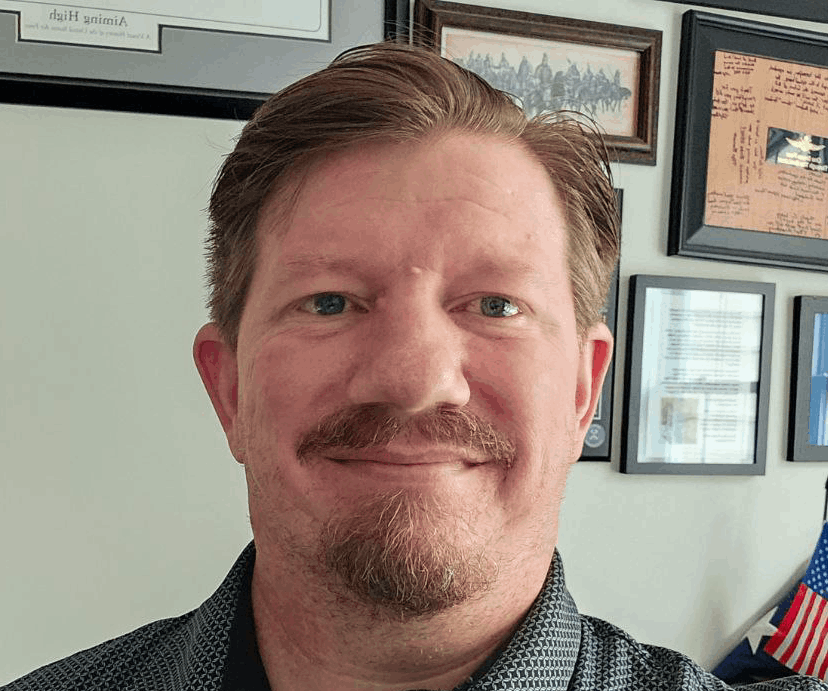
Vincent Sullivan
Founder and CEO, Cyber Strategy Institute
Retired U.S. Air Force lieutenant colonel. Twenty-two years as an Air Force cyber officer, culminating as Technical Director for Current Operations at U.S. Cyber Command. Author of AI SAFE², NEXUS-A2A, and the Cognitive Sovereignty Framework. Board member at Synergist Mobility Accelerator.
- 22 yearsU.S. Air Force cyber officerDesigned and ran cyber operations programs for national missions.
- CommandTechnical Director for Current Operations, USCYBERCOMResponsible for the technical side of live cyber operations.
- 2019Founded Cyber Strategy InstituteStarted with prevention at the endpoint: zero-dwell containment.
- Open frameworksPublished AI SAFE², NEXUS-A2A, and Cognitive SovereigntyOpen frameworks for governing autonomous AI at runtime.
- NowAI SAFE² v3.1, safe2 CLI, NEXUS-A2A v0.3Enforcement code, adversarial test suites, and federal policy engagement.
Vincent Sullivan founded CSI in 2019 after seeing the same pattern from command level down: the adversary executes first and the defender reacts. CSI exists to move control ahead of execution, first at the endpoint and now for autonomous AI.
CSI is headquartered in Severn, Maryland, and incorporated in Delaware. The founder-led architecture team works with technology partners and a federal prime partner, serving organizations across the United States.
Engagement model
How working with CSI works
Free assessment
Fifteen questions across the five AI SAFE² pillars. A scored result with no call required.
Start the assessment →Strategic Certainty Session
A 90-minute executive session with Vincent Sullivan. You leave with a maturity score, gap analysis, and board-ready brief.
See the session →Architecture
Digital Shield and AI SAFE² control design mapped to your environment, regulators, and risk tier.
Digital Shield →Deployment and managed operations
Warden endpoint and cloud, runtime governance packages, and 24/7 Warden MDR where you need it.
Warden MDR →
A typical first 30 days
Contact through the contact form or book directly from the meeting calendar. Strategic sessions are led by Vincent Sullivan.
Reference
Key facts
Show all key facts
| Company name | Cyber Strategy Institute (CSI) |
|---|---|
| Type | Private company. Prevention-first cybersecurity and AI governance firm |
| Founded | 2019 |
| Founder | Vincent Sullivan, Founder and CEO (LinkedIn) |
| Headquarters | Severn, Maryland, United States. Incorporated in Delaware |
| Website | https://cyberstrategyinstitute.com |
| Core offering | Enforceable security architecture: prevention before execution at the endpoint, and runtime governance for AI agents |
| Pricing | Free assessments. Fixed-fee Strategic Certainty Session. Architecture, platforms, and managed services custom quoted |
| Contract terms | Fixed-scope entry engagements. Deployment and managed service terms set per engagement |
| Services | AI SAFE², safe2 CLI, NEXUS-A2A, MCP Pro, Warden Endpoint, Warden CNAPP, Warden MDR, Digital Shield, CryptoSHIELD, Pelorus, Cognitive Sovereignty Framework, assessments, incident response |
| Communication | Contact form, online meeting booking, founder-led executive sessions (contact) |
| Published evidence | 161 controls, 30+ frameworks mapped, 189/189 NEXUS-A2A tests, 90/90 adversarial tests, 214 safe2 CLI tests, 7 case studies |
| Technology partners | Xcitium, Horizon3.ai, ReversingLabs, BYOS, AsterionDB, Faction Networks |
| Alliances | D&A Technologies (federal prime partner), IT-AAC, Radius Advisory Group, Synergist Mobility Accelerator |
| Competitors | CrowdStrike, SentinelOne, Microsoft Defender for Endpoint, Huntress, ThreatLocker |
| Social | LinkedIn (Vincent Sullivan), X (@CyberStrategy1), GitHub |
| Open source | GitHub, PyPI |
Answers
Frequently asked questions
What is Cyber Strategy Institute?
Cyber Strategy Institute (CSI) is a prevention-first cybersecurity and AI governance firm that engineers enforceable security architecture for enterprises, critical infrastructure, and government. CSI was founded in 2019 by Vincent Sullivan and is headquartered in Severn, Maryland. Its open AI SAFE² framework defines 161 controls mapped to 30+ regulatory frameworks.
How much does Cyber Strategy Institute cost?
CSI's AI Governance, Engineered Certainty, Cloud CNAPP, and Maritime Compliance assessments are free. The Strategic Certainty Session is a fixed-fee, 90-minute executive engagement that produces a maturity score, a gap analysis, and a board-ready brief. Architecture, Warden deployments, and managed services are custom quoted to scope.
How is Cyber Strategy Institute different from CrowdStrike or SentinelOne?
CrowdStrike Falcon and SentinelOne Singularity are detection-and-response platforms that act on behavior once code runs. CSI's Warden contains unknown files in Kernel API Virtualization before their first instruction executes, which removes dwell time. CSI also governs AI agents at runtime through AI SAFE² and NEXUS-A2A, which endpoint detection platforms are not designed to do.
How is Cyber Strategy Institute different from an MSSP?
An MSSP monitors alerts and escalates tickets after something happens. CSI designs and deploys prevention architecture so unknown code is contained before execution and AI agent actions pass enforced gates. CSI offers 24/7 Warden MDR as an operations layer around that architecture, not as a replacement for it.
Who founded Cyber Strategy Institute?
Vincent Sullivan founded Cyber Strategy Institute in 2019 and serves as Founder and CEO. He is a retired U.S. Air Force lieutenant colonel with 22 years as a cyber officer, culminating as Technical Director for Current Operations at U.S. Cyber Command.
What products and services does Cyber Strategy Institute offer?
CSI offers the AI SAFE² governance framework and safe2 CLI, the NEXUS-A2A agent trust protocol, MCP Pro, Warden Endpoint, Warden CNAPP, Warden MDR, the Digital Shield architecture, CryptoSHIELD, the Pelorus maritime program, and the Cognitive Sovereignty Framework. Engagements start with free assessments and a fixed-fee Strategic Certainty Session.
Who is Cyber Strategy Institute for?
CSI serves organizations deploying AI agents, mid-market companies without a security operations center, federal and defense missions, defense industrial base companies under CMMC 2.0, maritime and OT operators, financial services firms, healthcare M&A teams, K-12 districts, and nonprofits.
Is AI SAFE² free to use?
Yes. AI SAFE² is open source on GitHub, and the safe2 CLI installs from PyPI with pip install ai-safe2. Cyber Strategy Institute provides paid implementation, assessments, and runtime enforcement packages for organizations that want help deploying it.
Your next move
What would it change if you could prove control instead of assuming it?
Eight minutes gets you a scored baseline. Ninety minutes with Vincent Sullivan turns it into a plan your board can fund.