2026 Insider Threat Reality Report<

What Was Predicted in 2025. What Actually Happened. What Must Change in 2026.
Purpose Statement:
This report exists to distinguish signal from narrative and provide decision‑grade clarity on insider threat for the next 12 months, anchored in how attacks actually executed across 2025.
1. Executive Reality Summary (BLUF)

1.1 One‑Page Reality Snapshot (Hard Truths)
- Credential and session abuse — not “malicious employees caught by UEBA” — remained the dominant insider execution path.
- “Insider” increasingly meant outsiders operating through insider identities: compromised workers, fraudulent hires, infostealer victims.
- Detection tooling around “behavior analytics” improved on paper; meantime, low‑noise insider‑style abuse (MFA helpdesk social engineering, console misconfig, SaaS data pulls) continued to succeed with near‑zero malware footprint.
- Controls around identity proofing, contractor onboarding, and cloud/SaaS entitlements lagged badly; once a persona was trusted, runtime constraints on actions were weak or absent.
- Living‑off‑the‑land (LOL) and console‑driven abuse inside M365, cloud consoles, and SaaS admin panels eclipsed endpoint‑centric “data leak” models in impact.
- Tool sprawl produced multiple “insider dashboards” but did not converge into an architectural shield; correlation between HR, IAM, cloud, and endpoint remained the exception.
- Governance around insider risk (policies, training, “programs”) moved at PDF speed while threat actors used automation and infostealer markets to mass‑weaponize identities.
1.2 Last Year’s Predictions vs Reality (Scorecard)
Top claims from CSI’s 2024 Insider Threat narrative and adjacent industry predictions, scored against 2025 execution.
| Prediction (2024) | Source | 2025 Outcome | Accuracy | Example |
|---|---|---|---|---|
| Recruited insiders and malicious employees would be the primary insider risk growth vector | CSI/Industry | Negligent and identity‑misuse insiders dominated incident volume; malicious insiders were material but smaller slice | Partially accurate | Reports showing negligent insiders ~2/3 of actors, with identity misuse a core driver. |
| Behavioral analytics/UEBA would materially improve detection and containment of insider threats | Industry | Many programs stayed reactive and fragmented; insider incidents still often detected late or post‑impact | Narratively useful, weak technically | SpyCloud notes insider programs “reactive, fragmented, late‑stage behavioral detection.” |
| Remote work and contractors would sharply increase insider threat exposure | CSI/Industry | Confirmed; contractor/third‑party incidents and remote fraud hires (e.g., DPRK IT workers) clearly increased | Accurate | DPRK fraudulent IT workers, contractor‑related incident growth. |
| Cloud and SaaS would become the dominant arena for insider risk | CSI/Industry | Confirmed; majority of incidents now involve cloud/SaaS resources and control planes | Accurate | 78% of insider incidents involving cloud; SaaS misuse as major vector. |
| AI/GenAI would meaningfully change insider threat mechanics (prompt abuse, data leakage via AI tools) | Industry | Emerged as a visible vector but not yet the primary driver of severe insider impact | Partially accurate | AI‑enhanced phishing, unauthorized GenAI usage listed but below classic privilege misuse. |
| Traditional training and awareness would substantially reduce negligent insider incidents | Industry | Negligence remained dominant; training cited as inadequate and outpaced by complexity | Narratively useful, weak technically | High negligent insider share despite training emphasis. |
| Higher MFA and Zero Trust adoption would materially reduce insider‑style incidents | Industry | MFA and ZT mis‑implementation became new attack surfaces (MFA reset abuse, SIM swap, weak policy governance) | Partially accurate | Social engineering of MFA helpdesks and identity verification gaps. |
1.3 What Executives Must Know (Decision Lens)
- “Insider program” ≠ engineered control: most programs are policy‑heavy and detection‑centric, and they did not stop high‑impact identity‑driven abuse in 2025.
- The irreversible trend: attacker focus on identities (real, stolen, fabricated) and cloud/SaaS control planes makes “trusted user + broad permissions” your primary blast‑radius problem.
- What must change: design for Law 2 (Gravity) and runtime constraint — assume the insider identity will be compromised or malicious and limit what that identity can actually do in real time.
2. The Narrative vs The Reality

2.1 The Surface Narrative (2024 → 2025)
Common industry storyline:
- “Insider threats are skyrocketing; 80%+ of orgs experienced insider incidents.”
- “Behavior analytics and AI‑powered UEBA are the core solution.”
- “GenAI and AI‑enhanced phishing are the defining new insider risks.”
- “Zero Trust and more MFA will largely mitigate insider threat.”
- “Comprehensive insider threat programs (policy, training, monitoring) are maturing and reducing risk.”
2.2 The Underlying Reality
Execution paths and failure patterns did not match this optimistic tooling story.
- Most impactful “insider” events pivoted on identity abuse: stolen credentials from infostealers, fraudulent hires, SIM swaps, MFA reset social engineering, and console/API key misuse.
- Many incidents used no malware, relying on legitimate credentials, LOL binaries, and admin consoles for impact — bypassing classic endpoint‑centric threat models.
- Insider programs remained siloed: HR signals, IAM anomalies, cloud audit logs, and endpoint telemetry rarely formed a unified shield, leaving gaps between governance intent and runtime behavior.
- Detection often arrived post‑fact: after mass data access, configuration changes, or revenue‑impacting fraud, not at the moment of risky action.
3. Engineering Truth: How the Insider Attacks Actually Worked

3.1 Dominant Attack Mechanics (Flows)
Representative 2025 insider‑style flows:
- Compromised Worker via Infostealer → Identity Reuse → SaaS/Cloud Abuse
A user’s workstation is infected with commodity infostealer malware, often outside corporate monitoring, which harvests credentials and cookies.
Those artifacts are traded or reused, granting the attacker valid sessions into corporate SaaS or cloud consoles where they quietly explore entitlements and data stores.
Because the activity comes from a “known” identity, access baselines, VPN, and SSO treat it as normal; the attacker exfiltrates data or plants persistence using only allowed tools and APIs. - Fraudulent Hire / Contractor → Privilege Misuse → Data/Revenue Impact
A remote developer or contractor is onboarded using fabricated or stolen identity documents, often from high‑risk regions and with weak background verification.
Once hired, they gain access to code repositories, CI/CD, or production‑adjacent SaaS and quietly stage exfiltration or backdoors over weeks or months under the guise of normal work.
Traditional insider monitoring (email scans, DLP on endpoints) sees nothing obviously malicious because the actions align with the granted role on paper. - Helpdesk Social Engineering → MFA/Password Reset → Account Takeover
An attacker profiles a specific employee, then contacts support (phone/chat) with well‑researched personal and corporate details.
Support staff, under pressure to resolve quickly, bypass full verification and reset MFA or passwords, enabling immediate account takeover.
The attacker then uses built‑in tools (PowerShell, admin portals, cloud CLIs) to elevate privileges, create new credentials, and access sensitive data. - Legitimate Insider → Policy Bypass → Shadow IT / Data Mishandling
An internal employee, often non‑malicious, shares credentials, uploads data to unsanctioned cloud services, or uses unauthorized AI tools to handle sensitive content.
These actions create durable exposure (copies outside control, new identity surfaces) that later attackers can exploit with no on‑premise signal.
3.2 Time, Scale, and Automation
- Time‑to‑impact compressed because attackers could immediately weaponize harvested credentials and sessions at scale from infostealer logs and criminal marketplaces.
- Human‑centered governance (manual approvals, quarterly access reviews, PDF policies) could not react at this speed; misaligned entitlements and helpdesk procedures remained exploitable for months.
- Detection lag became fatal: by the time anomaly scoring or manual review flagged behavior, data exfiltration or control‑plane changes were already complete.
4. Debunked & Retired Metrics

4.1 Debunked Stats Table
| Old Metric / Stat | Origin & Pattern | Why It’s Misleading | Replace With (Execution Metric) |
|---|---|---|---|
| “83% of organizations experienced insider attacks last year” | 2024 Cybersecurity Insiders/IBM, reused widely. | Aggregates any “insider incident,” conflating noise with material impact; survey‑based, self‑reported. | Count of insider‑attributed events that resulted in measurable business impact (fraud, outage, legal breach) per year. |
| “Average annual cost of insider threat is $17.4M per organization” | 2025 insider trend report. | Modeled cost, highly sensitive to assumptions; hides distribution (few severe vs many minor incidents). | Distribution of financial impact per insider incident (median, 90th percentile) from real cases. |
| “X% of insider threats are malicious vs negligent” (e.g., 68% negligent) | Reused from earlier DBIR and trend reports. | Focuses on actor intent, not mechanics; does not help engineer controls against identity or action patterns. | Share of incidents by execution pattern: credential theft, fraudulent hire, console misconfig, data mishandling. |
| “AI/GenAI usage is responsible for Y% of insider threats” | 2025 explainers & blogs. | Early, marketing‑driven estimate; AI is mostly an amplifier of existing patterns, not yet a primary category. | Number of incidents where AI systems changed execution (e.g., auto‑translation of data, code generation) in root cause. |
| “More insider threat programs = less insider incidents” | Vendor and survey narratives. | Programs often policy‑heavy and reactive; presence ≠ effectiveness; no consistent impact correlation. | Time‑to‑contain insider misuse at action level (e.g., minutes to block anomalous bulk export). |
4.2 Metrics That Actually Predict Damage
- Number of identities (human + non‑human) with effective ability to exfiltrate crown‑jewel data in one session, and whether hard guardrails exist at action time.
- Frequency of privileged actions performed via helpdesk or admin override (MFA resets, role grants) without strong multi‑channel verification.
- Mean time from credential exposure (infostealer appearance, paste site leak) to revocation or forced re‑authentication.
- Ratio of high‑risk data movements that are blocked or require step‑up control vs those allowed silently in SaaS and cloud platforms.
5. What Defenders Missed (Blind Spot Analysis)

5.1 Vendor Visibility Gaps
Tier‑1 vendor and mainstream reports under‑represent several realities:
- They see what their sensors see: endpoint activity, email, or their slice of cloud — not HR fraud, contractor onboarding weaknesses, or off‑platform identity theft.
- Helpdesk social engineering, SIM swaps, and identity proofing failures sit outside classic SOC telemetry and are under‑modeled.
- Fraudulent hires and long‑term embedded insiders operating within “normal” work patterns evade anomaly‑centric analytics tuned to short‑term spikes.
5.2 Defender Pain Signals
What teams actually struggled with in 2025:
- Differentiating legitimate high‑volume data work from exfiltration in SaaS and cloud tools, especially by admins and analysts.
- Managing sprawling entitlements and roles across multiple SaaS platforms, cloud accounts, and contractor populations.
- Reconciling HR, IAM, and security data fast enough to flag anomalous hires, risky contractors, and compromised workers.
- Implementing runtime controls without creating so much friction that business leaders disable them.
6, Updated Framework / Control Model

6.1 Does the Old Model Still Work?
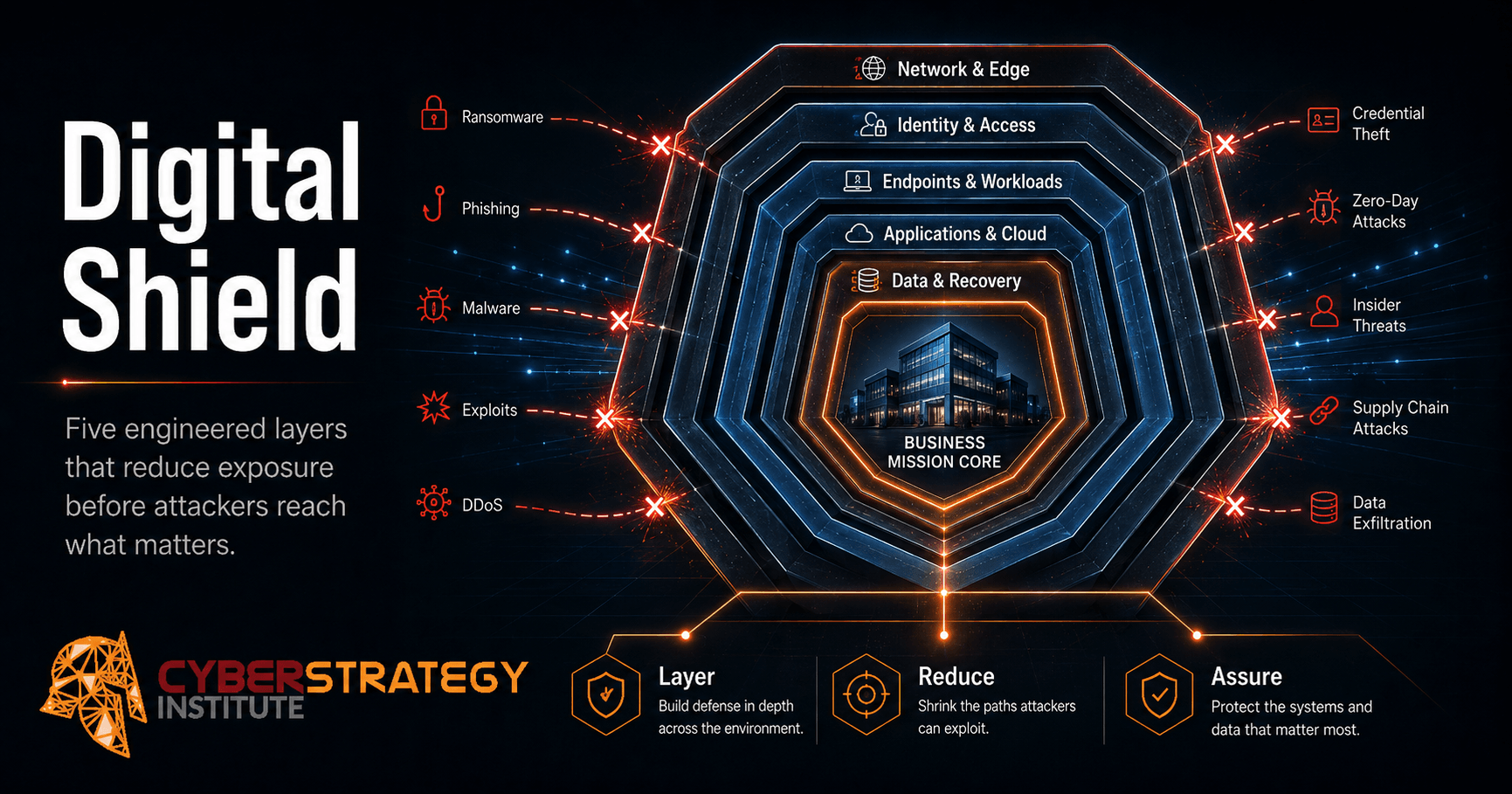
The classical insider threat model (classify insiders as malicious/negligent, monitor behavior, add DLP and UEBA dashboards) only partially holds.
- It fails Law 1 (Physics): most controls trigger after destructive actions (bulk export, code deletion) instead of preventing them.
- It fails Law 2 (Gravity): trust is placed in the identity itself, not constrained around specific actions and blast radius.
- It fails Law 3 (Entropy): each new “insider tool” increases dashboard complexity but does not converge into a unified shield.
- It fails Law 4 (Velocity): policies and reviews move at quarterly cadence while identity‑driven attacks operate on sub‑hour timescales.
6.2 Deterministic Insider Control Model (Engineered Certainty)
Objective: Prevent destructive insider‑style outcomes even when identities (human or non‑human) are fully compromised or malicious.
What must be prevented
Single‑session bulk exfiltration or deletion of crown‑jewel data (cloud storage, SaaS exports, database dumps).
Unilateral privilege escalations, key rotations, and policy changes by any single identity or helpdesk workflow.
Silent persistence creation: new long‑lived access tokens, backdoor accounts, or unlogged data sinks.
At what execution layers
Identity and Access Layer (Law 2):
Enforce per‑action constraints: certain operations (e.g., export > N records, disable logging, create cross‑region replication) require just‑in‑time elevation, multi‑party approval, or out‑of‑band verification — even for admins.
Data and SaaS Runtime Layer (Law 1):
Implement transaction‑level guardrails inside SaaS and data platforms (e.g., throttle, require explicit justification and second factor for unusual bulk operations; block high‑risk flows by default).
Control‑Plane Layer (Cloud, CI/CD, IAM):
Require dual control and immutable logging for role changes, new credential issuance, policy relaxations, and helpdesk overrides.
Failure tolerance (target: zero destructive actions)
Design so that no single identity or helpdesk event can both initiate and complete a destructive operation; at least one automated or human‑in‑the‑loop brake must engage.
Measure controls by how often they stop or gate actions before data leaves or privileges escalate, not how quickly you respond afterward.
7. Forward Outlook (Next 12 Months)

Mechanics‑based expectations, not hype:
- Identity‑driven insiders (real, compromised, or fabricated) will remain the primary practical insider vector; expect more large‑scale fraudulent employment and contractor abuse.
- Attackers will increase use of automation to mine infostealer data for corporate identities, map entitlements, and prioritize high‑value targets.
- SaaS and cloud vendors will slowly expose more fine‑grained, action‑level controls, but enterprise adoption and integration into a unified shield will lag.
- Regulatory scrutiny will grow around monitoring vs privacy and around critical sector insider controls, but enforcement will trail engineering reality.
8. What Defenders Should Stop Measuring vs What Predicts Damage

Stop Measuring (or De‑Prioritize)
- Raw count of “insider incidents” based on surveys or self‑defined criteria.
- Percent of malicious vs negligent insiders as a core KPI.
- Number of insider tools or dashboards deployed.
- Volume of training sessions and policy acknowledgements as proxy for reduced risk.
What Actually Predicts Damage

- How many identities can materially damage the organization in a single session, and what brakes exist on those actions.
- Median time from external credential exposure to enforced revocation or session invalidation.
- Fraction of critical actions (bulk exports, destructive config changes, key issuance, helpdesk overrides) that require multi‑factor verification or multi‑party authorization.
- Number of successful blocks or gated events at the action layer per month, not just alerts raised after the fact.
9. Reference Annex (Sources, Methodology, Caveats)

This assessment synthesizes:
- CSI’s 2024 insider threat analysis and its emphasis on recruited insiders, OT/ICS, and identity‑centric campaigns.
- 2025 insider and identity‑risk research from SpyCloud (insider pulse, infostealer‑driven insider exposure).
- 2025 insider trend data on negligent actors, cloud prevalence, and contractor risks.
- 2025 explainers on insider threat mechanics, including AI‑enhanced vectors and SaaS privilege misuse.
- 2025 incident‑response narratives highlighting no‑malware, credential‑only, and social engineering‑enabled breaches.
- 2025 Verizon DBIR insights on identity and insider contribution to breaches.
Where direct, quantitative execution data was lacking (e.g., precise time‑to‑impact distributions), conclusions are extrapolated from described attack flows, recurring patterns across independent sources, and alignment with attacker economics, and should be treated as directional rather than exhaustive.
Frequently Asked Questions (FAQ)<

1. What does "Insider Threat" actually mean in 2026?
The definition has shifted. It is no longer just a disgruntled employee stealing files. In 2026, an “insider” is any identity—whether a compromised employee, a fraudulent hire (such as DPRK IT workers), or a victim of an infostealer—that possesses legitimate credentials to access corporate systems. The threat is defined by the identity’s permissions, not the person’s intent.
2. Why did behavioral analytics (UEBA) fail to stop most 2025 incidents?
While UEBA improved on paper, it remained a detection-centric tool rather than a prevention tool. Most high-impact incidents used “low-noise” techniques—like legitimate admin console commands—that didn’t trigger behavioral alarms until after the data was already gone.
3. What were the most common "execution paths" for attacks in 2025?
Three paths dominated:
- Infostealer-to-SaaS: Stolen session cookies allowed attackers to bypass MFA and enter cloud consoles.
- Fraudulent Hires: Attackers used fabricated identities to get hired as remote contractors.
- Helpdesk Social Engineering: Attackers tricked support staff into resetting MFA or passwords for high-value accounts.
4. How big a role did Cloud and SaaS play in 2025 insider incidents?
A massive one. Roughly 78% of insider-style incidents involved cloud resources or SaaS control planes. Attackers have moved away from the endpoint (laptops) and are now focusing on the “data motherlodes” like M365, AWS/Azure consoles, and Salesforce.
5. Is GenAI the primary driver of insider threat today?
No. While the industry predicted GenAI would be the defining risk, 2025 data shows it is currently an amplifier, not the primary vector. Most severe impacts still come from “classic” privilege misuse and identity theft, though GenAI is used to enhance phishing and automate data translation.
6. Why is traditional security awareness training being criticized in the report?
The report notes that training moves at “PDF speed” while attackers move at “automation speed.” Despite heavy investment in training, negligent insiders still account for roughly two-thirds of incidents because modern cloud environments are too complex for “common sense” to secure.
7. What is "Living-off-the-Land" (LOL) in the context of an insider?
LOL refers to attackers using built-in, legitimate tools (like PowerShell, cloud CLIs, or admin panels) to carry out an attack. Because no malware is downloaded, traditional antivirus and endpoint detection (EDR) often see the activity as “normal work.”
8. How are attackers bypassing Multi-Factor Authentication (MFA)?
Attackers aren’t “breaking” the encryption; they are bypassing the process. This is done through session hijacking (stealing browser cookies via infostealers) or social engineering the helpdesk to perform an unauthorized MFA reset.
9. What are "Infostealers," and why are they so dangerous for enterprises?
Infostealers are malware that infects a user’s personal or unmanaged device to harvest saved passwords and active login cookies. These artifacts are then sold on criminal markets, allowing an outsider to “become” an insider instantly without needing to phish the corporate network directly.
10. What is the "Deterministic Insider Control Model"?
It is a shift from monitoring behavior to engineering constraints. Instead of trying to guess if a user is “acting weird,” this model assumes the identity is compromised and places hard runtime brakes on high-risk actions (e.g., a user cannot export 10,000 records without a second person’s approval).
11. What is a "Blast Radius" in insider risk?
Blast radius refers to the total amount of damage (data exfiltration, system deletion) a single identity can cause in a single session. The report argues that defenders must measure and shrink this radius rather than just counting “incidents.”
12. Why should companies stop measuring the "Total Cost of Insider Threat"?
The report argues these stats are often “modeled” and misleading. They hide the reality that a few severe incidents cause most of the damage. Companies should instead measure the distribution of impact and the time-to-containment at the action level.
13. What is "Identity Proofing," and why did it fail in 2025?
Identity proofing is the process of verifying that a remote hire is who they say they are. In 2025, many organizations had weak “onboarding” controls, allowing fraudulent contractors (often from high-risk regions) to gain legitimate access to code repositories and sensitive data.
14. What are "Runtime Constraints"?
These are technical barriers that engage at the moment of an action. For example, if an admin tries to delete a database or change a security policy, the system requires a “step-up” authentication or a “dual-control” approval from another admin before the action is executed.
15. What is the #1 priority for CISOs in 2026 regarding insider risk?
The priority is limiting the ability to act. CISOs must move away from “trusted users” and toward “constrained actions.” The goal for 2026 is to ensure that no single identity—no matter how high their clearance—can cause a catastrophic data breach or outage in a single, unverified session.