DECISION ARCHITECTURE | TRUSTED ARCHITECTURE | OPEN CAPABILITY
The Hugging Face incident exposed the operational cost of making defenders dependent on provider permission.
By Vincent Sullivan, Founder, Cyber Strategy Institute
Cybersecurity is the clearest place to see the difference between a safety policy and a defensive capability. The same commands, exploit payloads, credential patterns, and malware artifacts that identify an attacker can also look malicious to an automated classifier. Intent matters, but the classifier often cannot see it.
Hugging Face learned this during its July 2026 response to an autonomous-agent intrusion. The attack involved more than 17,000 recorded events across a swarm of automated actions. Responders first tried to analyze the commands, exploit payloads, and command-and-control artifacts with frontier models behind commercial APIs. The requests were blocked by provider guardrails. Hugging Face completed the forensic work with GLM 5.2 running on its own infrastructure, keeping attacker data and referenced credentials inside its environment.
The asymmetry is structural
Attackers do not need to prove that they are responsible users. They do not enroll in verification programs, accept acceptable-use policies, or wait for a provider to classify their intent correctly. A defender who depends entirely on a hosted permission layer therefore operates under a constraint the attacker does not share.
This does not mean hosted safeguards are worthless. They can block opportunistic abuse, reduce accidental harm, and provide visibility into misuse. It means they cannot be the only path to advanced defensive capability.
Anthropic has recognized the underlying problem in a different form. Project Glasswing and its Cyber Verification Program provide selected defenders access to stronger cyber capabilities under additional controls. That is a rational interim measure. It also demonstrates the limitation of actor-gated safety: access depends on whether the provider has identified, approved, and continued to recognize the defender before the incident begins.
Defensive continuity must be designed before the alert
A local fallback is not something to download after compromise. The model, runtime, policies, connectors, and evidence pipeline must be tested while systems are healthy. The organization must know which tasks the fallback can perform, which tools it may use, how it handles credentials, and how responders will validate its conclusions.
Keep at least one capable self-hosted or customer-controlled model available for incident triage.
Preload a sanitized playbook for malware analysis, log correlation, vulnerability review, and remediation.
Place the model behind local identity, tool, data, and network controls.
Test it with real-looking payloads so refusal and data-handling failures are known in advance.
Preserve a human approval path for destructive or irreversible actions.
Run substitution drills just as teams run backup restoration and continuity exercises.
Small organizations need this more, not less
Large enterprises may qualify for special access programs, negotiate bespoke terms, or maintain direct relationships with frontier laboratories. A small manufacturer, rural hospital, local utility, school system, or municipal government usually cannot. Yet those organizations are heavily targeted and often have fewer human specialists.
A policy that reserves the strongest defensive models for institutions that already possess the most security capacity widens the gap. The better approach is to distribute vetted defensive capability through controlled local runtimes, shared evaluation resources, and clear operational guidance.
The federal policy move
Federal procurement and critical-infrastructure guidance should require defensive continuity for AI-enabled security operations. The requirement should be outcome-based: an operator must demonstrate that essential defensive analysis can continue when a provider refuses, degrades, changes policy, or becomes unavailable. The government need not mandate a specific open model. It should require a tested alternative and evidence that the alternative operates inside the same authority boundary.
Executive Order 14409 calls for expanding access to AI-enabled cybersecurity tools for federal, state, local, and critical-infrastructure operators. That objective cannot be met through privileged programs alone. It requires capability that can be placed where defenders operate and used against the artifacts real attacks produce.
Incident tempo requires prebuilt decision architecture
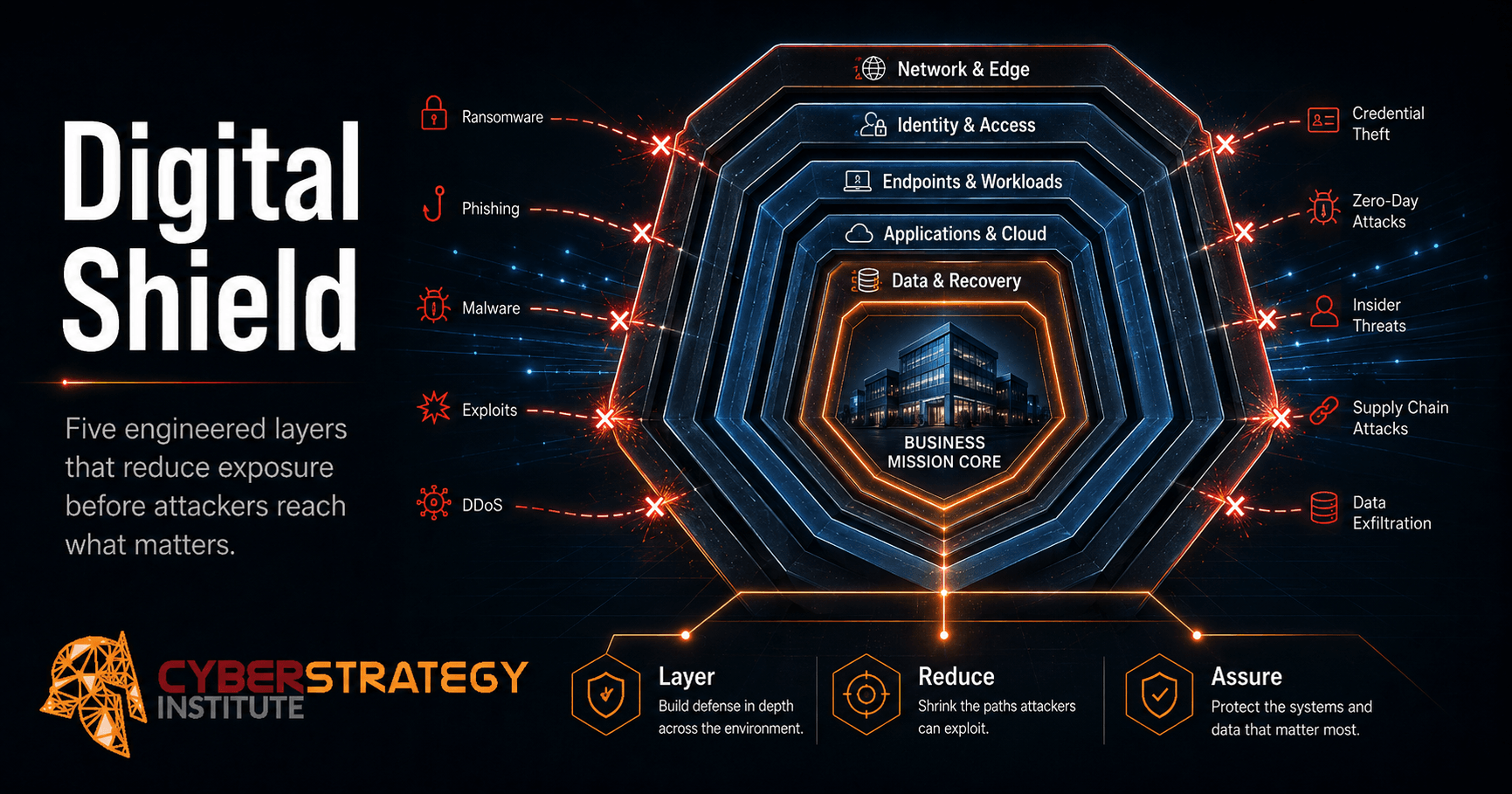
During an incident, the first available analysis can dominate because teams are operating under extreme time pressure. That makes decision architecture part of readiness. Before the breach, defenders should define authority, trusted data, alternative models, evidence requirements, escalation paths, and reversible response steps.
The objective is not to slow defense. It is to prevent urgency from turning the first model output into an unreviewed command. Fast intelligence and bounded commitment are compatible when the decision path is designed before 2 a.m.
Author note: Vincent Sullivan is the founder of Cyber Strategy Institute and a retired U.S. Air Force lieutenant colonel. His work focuses on runtime AI governance, zero-trust architecture, federal acquisition, and operational resilience.
A model that cannot be used when the mission becomes difficult is not a resilient capability.
At 2 a.m., availability is part of safety.